Total Shoulder Arthroplasty

expert shoulder replacement in the villages, fl

Restoring movement, reducing pain, and getting you back to the life you love — with personalized orthopedic care from Dr. Alfred Cook and the AOI team.

About the Procedure

What Is Total Shoulder Arthroplasty?

The shoulder is a ball and socket joint — the rounded head of the upper arm bone (humerus) fits into a cup-shaped socket in the shoulder blade (scapula). In a healthy shoulder, smooth cartilage covers both surfaces, allowing fluid, pain-free movement.

When that cartilage breaks down — from arthritis, injury, or disease — bone can rub against bone, causing severe pain, stiffness, and limited mobility that significantly impacts daily life. When non-surgical treatments no longer provide relief, total shoulder arthroplasty (shoulder replacement surgery) may be the most effective path forward.

During the procedure, the damaged portions of the ball and socket are removed and replaced with prosthetic implants made of metal and high-grade plastic. These implants are designed to recreate the normal mechanics of your shoulder, restoring a smooth, functioning joint.

At Advanced Orthopedics Institute, serving patients throughout The Villages, Lady Lake, Leesburg and surrounding Lake and Sumter County communities, we are able to evaluate each patient individually to determine whether shoulder replacement is the right solution — and if so, which type of procedure will deliver the best outcome for your specific condition.
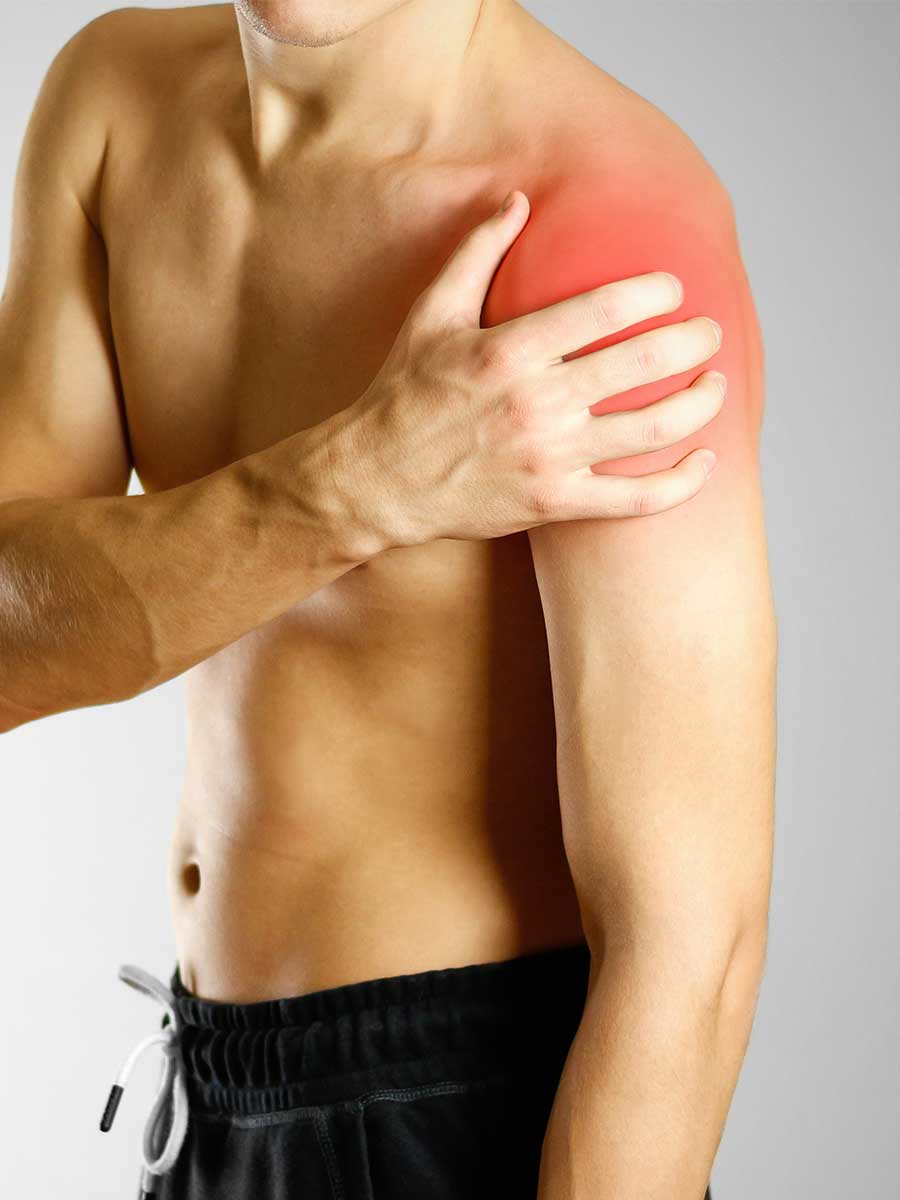
man with shoulder pain
Indications for surgery

Conditions That May Require Shoulder Replacement

Osteoarthritis

Gradual wearing away of protective cartilage leads to bone-on-bone contact, pain, stiffness, and bone spur formation. The most common reason for shoulder replacements.

Rheumatoid Arthritis

An autoimmune condition where the body attacks joint tissue. In advanced stages, arthroplasty may be the best option to restore function and eliminate chronic pain.

Rotator Cuff Tear Arthropathy

Long-standing large rotator cuff tears alter shoulder mechanics and cause arthritis, often requiring a reverse total shoulder arthroplasty.

Severe Fractures

Complex fractures unlikely to heal correctly may be best addressed with joint replacement rather than repair, particularly in older patients.

Osteonecrosis

When blood supply to the humeral head is disrupted, bone tissue dies and the joint surface can collapse. Replacement is often the most effective solution.

indications for surgery

Conditions That May Require Shoulder Replacement

Shoulder replacement is considered when joint damage is severe and conservative treatments no longer provide meaningful relief. Common causes include:

Total Shoulder Arthroplasty (Anatomic)

The damaged humeral head is replaced with a metal ball and the glenoid socket is resurfaced with a plastic component. Best when the rotator cuff tendons are intact.

Reverse Total Shoulder Arthroplasty

Ball and socket positions are switched, allowing the deltoid muscle to power movement. Preferred when the rotator cuff is severely torn or non-functional.

Hemiarthroplasty

Only the humeral head is replaced while the natural glenoid socket remains intact. Appropriate for specific fractures where the socket is still healthy.

What to Expect: Before, During & After Shoulder Replacement
  • Your Consultation at AOI Your journey begins with a comprehensive evaluation at our office in The Villages. Our team will review your medical history, discuss your symptoms, and order any necessary imaging — such as X-rays or MRI — to assess the condition of your shoulder joint. Together, you’ll discuss all available treatment options, conservative approaches first, and determine whether shoulder replacement surgery is the right next step.

  • The Surgery Total shoulder arthroplasty is typically performed under general anesthesia and takes approximately two to three hours. Dr Cook will make an incision at the front of the shoulder, carefully moving muscles aside to access the joint. The damaged bone surfaces are removed and the prosthetic components are precisely fitted. Most patients go home the same day or after a brief overnight stay.
  • Recovery & Rehabilitation Recovery from shoulder replacement is a gradual process. You’ll wear a sling for the first several weeks to protect the joint while it heals. Physical therapy — which we offer on-site at our Villages location — typically begins within the first few days and plays a critical role in restoring strength, range of motion, and function. Most patients begin to notice significant improvement within three to six months, with continued gains possible up to a year or more after surgery.

man playin golf shoulder pain

Frequently Asked Questions

Have more questions? Our team is here to help you understand your options and make the right decision for your health.

Good candidates for shoulder replacement are typically patients who experience severe shoulder pain that limits daily activities, have tried conservative treatments — such as physical therapy, medications, or injections — without adequate relief, and whose imaging shows significant joint damage. Age, overall health, bone quality, and the condition of the rotator cuff all play a role in determining the most appropriate type of replacement. The best way to find out is through a personal consultation with one of our AOI practitioners.

In a standard (anatomic) total shoulder replacement, the prosthetic components mimic the natural anatomy of the shoulder — a metal ball replaces the humeral head and a plastic cup resurfaces the socket. A reverse shoulder replacement switches those positions, placing the ball on the socket side and the cup on the arm side. Reverse replacement is typically recommended when the rotator cuff is severely torn or no longer functional, as it allows the deltoid muscle to do the work of moving the arm.

Modern shoulder replacement implants are designed to be durable and long-lasting. Studies suggest that the majority of shoulder replacements remain functional for 10 to 20 years or more. Factors such as activity level, implant type, bone quality, and adherence to post-operative guidelines all influence longevity. Your AOI surgeon will discuss realistic expectations for your specific situation during your consultation.

Most patients wear a sling for four to six weeks after surgery. Physical therapy typically starts within the first week and continues for several months. Pain and swelling gradually improve over the first few weeks. Many patients can perform light daily activities within a few months, with more demanding tasks possible at six months or beyond. Full recovery — including maximum strength and range of motion — can take up to a year.

Yes. Physical therapy is a critical part of the recovery process and significantly impacts your outcome. At Advanced Orthopedics Institute, we offer on-site physical therapy in The Villages, making it convenient to access rehabilitative care as part of your overall treatment plan.

Many patients undergoing shoulder replacement return home the same day or after a single overnight stay, depending on their health, the complexity of the procedure, and the type of anesthesia used. Your care team will advise you based on your specific situation.

The REGENETEN® Bioinductive Implant is a minimally invasive, arthroscopic treatment for rotator cuff tears. It uses a small collagen-based scaffold to stimulate the body’s natural healing response and promote new tendon tissue growth. It is designed for patients with partial or full-thickness rotator cuff tears who want a less invasive alternative to traditional open rotator cuff repair. Ask your AOI physician whether you may be a candidate.

During your first visit, your AOI physician will review your health history, perform a physical examination of the shoulder, and discuss your symptoms and how they affect your daily life. Imaging studies such as X-rays may be taken on-site in our in-office radiology suite. You’ll leave with a clear understanding of your diagnosis and a recommended treatment plan tailored to your needs.

REGENETEN® Bioinductive Implant

For patients with rotator cuff tendon tears not yet requiring full shoulder replacement, our physicians offer the REGENETEN® Bioinductive Implant — an innovative, minimally invasive technology from Smith+Nephew.

Rather than simply reattaching tissue, this approach works with your body’s natural healing process to stimulate the growth of new tendinous tissue at the injury site. Delivered arthroscopically through a small incision and fully absorbed by the body within approximately six months.

At Advanced Orthopedics Institute, our physicians are proud to offer the REGENETEN® Bioinductive Implant for patients with rotator cuff tears.

REGENETEN Bioinductive Implant

REGENETEN Bioinductive Implant

Your Physician is pioneering the use of a breakthrough technology designed for people suffering from rotator cuff tendon tears in the shoulder joint. The REGENETEN Bioinductive Implant, an innovative, minimally invasive solution, goes beyond traditional surgery to help the tendon heal through the induction of new tendinous tissue growth1,2,3.

A new approach - REGENETEN Bioinductive Implant

Until now, surgeons have focused on addressing the mechanics of the shoulder when repairing a rotator cuff injury, but had limited options to address the biology of healing. Traditional rotator cuff repair procedures involve suturing tendon to bone are associated with potentially long rehabilitation and substantial lifestyle interruption. As a result, many people choose to forego surgery until their pain is severe and everyday tasks are affected. However, as rotator cuff disease progresses, it can become increasingly difficult for your surgeon to repair and small tears can grow in severity and size over time 4,5,6.

The REGENETEN Bioinductive Implant is an innovative technology designed to address the treatment of rotator cuff disease

The REGENETEN Bioinductive Implant offers a new solution that supports the body's natural healing response to facilitate new tissue growth and potentially disrupt disease progression 1,2,7-9 by providing a framework for tissue growth.

What is it?

The technology includes a collagen based bioinductive implant about the size of a postage stamp. This implant is delivered arthroscopically through a small incision over the location of your rotator cuff tendon injury. Your physician will secure it in place with small anchors.

How does it work?

Progression of healing

The implant is placed on top of the rotator cuff After implantation, the REGENETEN Bioinductive implant creates an environment that is conducive to healing 1,2,7 and the proprietary composition facilitates the formation of new tissue 1,2,7,10.

The implant induces new tissue growth, increasing tendon thickness 1,2,3.
New tissue allows tendon to restore its natural attachment points in the body3 and is indistinguishable from native tendon at 3 months 1,2,11.

New tissue integrates and remodels into the healing tendon 2,7,11 .
Tissue strength comes from the induced tissue, not the implant, which has been shown to be completed absorbed within six months 7,11, *.

How does the REGENETEN Bioinductive Implant benefit you?

No matter where you are in the progression of rotator cuff disease, the REGENETEN Bioinductive Implant has shown consistent healing of rotator cuff tears in both partial and full thickness tears 1,2,8,12.

  • Preliminary evidence indicates a reduction in re-tear rates compared to the standard of care in patients with full thickness tears 3,13
  • No tear progression was observed by MRI in any patients at 24 months in a study on partial thickness tears (n=13) 1
  • Clinically meaningful improvements in pain and function scores at one year compared to pre-operation values 14,15
  • Excellent safety profile shows there have been no serious implant-related adverse events reported in the published literature 1-3,7,12

References

  1. Bokor DJ, Sonnabend D, Deady L, et al. Evidence of healing of partial-thickness rotator cuff tears following arthroscopic augmentation with a collagen implant: a 2-year MRI follow-up. Muscles, Ligaments Tendons J 2016;6(1):16-25.
  2. Schlegel TF, Abrams JS, Bushnell BD, Brock JL, Ho CP. Radiologic and clinical evaluation of a bioabsorbable collagen implant to treat partial-thickness tears: a prospective multicenter study. J Shoulder Elbow Surg. 2018 27(2):242-251.
  3. Bokor DJ, Sonnabend D, Deady L, et al. Preliminary investigation of a biological augmentation of rotator cuff repairs using a collagen implant: a 2-year MRI follow-up. Muscles, Ligaments Tendons J 2015;5(3):144-150.
  4. Henry P, Wasserstein D, Park S, et al. Arthroscopic repair for chronic massive rotator cuff tears: A systematic review. Arthroscopy. 2015;31(12):2472-80.
  5. Bishop J, Klepps S, Lo IK, Bird J, Gladstone JN, Flatow EL. Cuff integrity after arthroscopic versus open rotator cuff repair: A prospective study. J Shoulder Elbow Surg. 2006;15(3):290-299.
  6. Heuberer PR, Smolen D, Pauzenberger L et al. Longitudinal long-term magnetic resonance imaging and clinical follow-up after single-row arthroscopic rotator cuff repair. Am J Sports Med. 2017;45(6):1283-1288.
  7. Van Kampen C, Arnoczky S, et al. Tissue-engineered augmentation of a rotator cuff tendon using a reconstituted collagen scaffold: a histological evaluation in sheep. Muscles, Ligaments Tendons J. 2013;3(3):229-235.
  8. Bokor DJ, Sonnabend DH, et al. healing of partial thickness rotator cuff tears following arthroscopic augmentation with a highly porous collagen implant: a 5-year clinical and MRI follow-up. Muscles, Ligaments Tendons J 2019;9(3):338-347.
  9. McElvany MD, McGoldrick, et al. Rotator cuff repair: published evidence on factors associated with repair integrity and clinical outcome. Am J Sports Med. 2015;43(2)491-500.
  10. Smith + Nephew 2020 REGENETEN Collagen Implant Physical Characteristics. Internal Report
  11. Arnoczky SP, Bishai SK, Schofield B, et al. Histologic Evaluation of Biopsy Specimens Obtained After Rotator Cuff Repair Augmented With a Highly Porous Collagen Implant. Arthroscopy. 2017;33(2):278-283.
  12. Thon SG, O'Malley L, O'Brien MJ, Savoie FH. Evaluation of Healing Rates and Safety With a Bioinductive Collagen Patch for Large and Massive Rotator Cuff Tears: 2-Year Safety and Clinical Outcomes. Am J Sports Med 2019;47(8):1901-1908.
  13. Smith and Nephew 2019. An overview of the outcomes associated with the standard of care for the surgical treatment of rotator cuff tears. Internal Report EO/SPM/REGENETEN/005/v1
  14. McIntyre L, Bishai SK, et al. Patient-reported outcomes following use of a bioabsorbable collagen implant to treat partial and full-thickness rotator cuff tears. Arthroscopy. 201935(8):2262-2271.
  15. Cvetanovich GL, Gowd AK, et al. Establishing clinically significant outcome after arthroscopic rotator cuff repair. J Shoulder Elbow Surg. 2019;28(5):939-948.

*on human biopsy (n=1) and in-vivo sampling

All information provided on this website is for information purposes only. Every patient's case is unique and each patient should follow his or her doctor's specific instructions. Please discuss nutrition, medication and treatment options with your doctor to make sure you are getting the proper care for your particular situation. If you are seeking this information in an emergency situation, please call 911 and seek emergency help.

All materials copyright © 2024 Smith & Nephew, All Rights Reserved.